AI Is Not a Phase. It's an Era.
It's 11pm on a Wednesday and I've been at this for fourteen hours and I have no interest in stopping.
This is new.
Three years of running an agency teaches you to recognise the pattern of work that quietly hollows you out. The grind that pays the bills and slowly erodes whatever made you want to do this in the first place. The 11pm in front of a screen where you're not building anything anymore, you're just clearing a queue.
What I'm doing right now is the opposite of that, and the difference is AI.
I've never worked more than I'm working now. I've also never had more fun while doing it. Which is a sentence I would have rolled my eyes at twelve months ago, because it sounds like the kind of thing a founder says in a LinkedIn humblebrag right before they pitch you a course.
So let me show you what I actually mean.
The sprint
Last month I did Flux Academy's AI Web Design Sprint, run by Julian Galluzzo. Four days, one-hour lessons, ninety-minute Q&As on the back of each session. The exercise was simple: take a Figma design, build it into a fully responsive, animated, hosted website using Claude Code, GitHub, and Vercel. No Webflow. No Framer. No browser-based builder.
I went in already convinced AI was reshaping how I work. I came out realising I had no idea how far behind I was on what's actually possible.
One moment landed harder than the rest. Julian, mid-sprint, talked about taking his own Webflow site, exporting it, and rebuilding it on Next.js using the workflow he was teaching us. Same content. Same design. Instantly better SEO. Instantly better performance. Instantly cleaner accessibility scores. Instantly fewer plan-tier constraints. Same brand, better engine.
That was the moment something clicked I have not been able to unclick since.
The stack
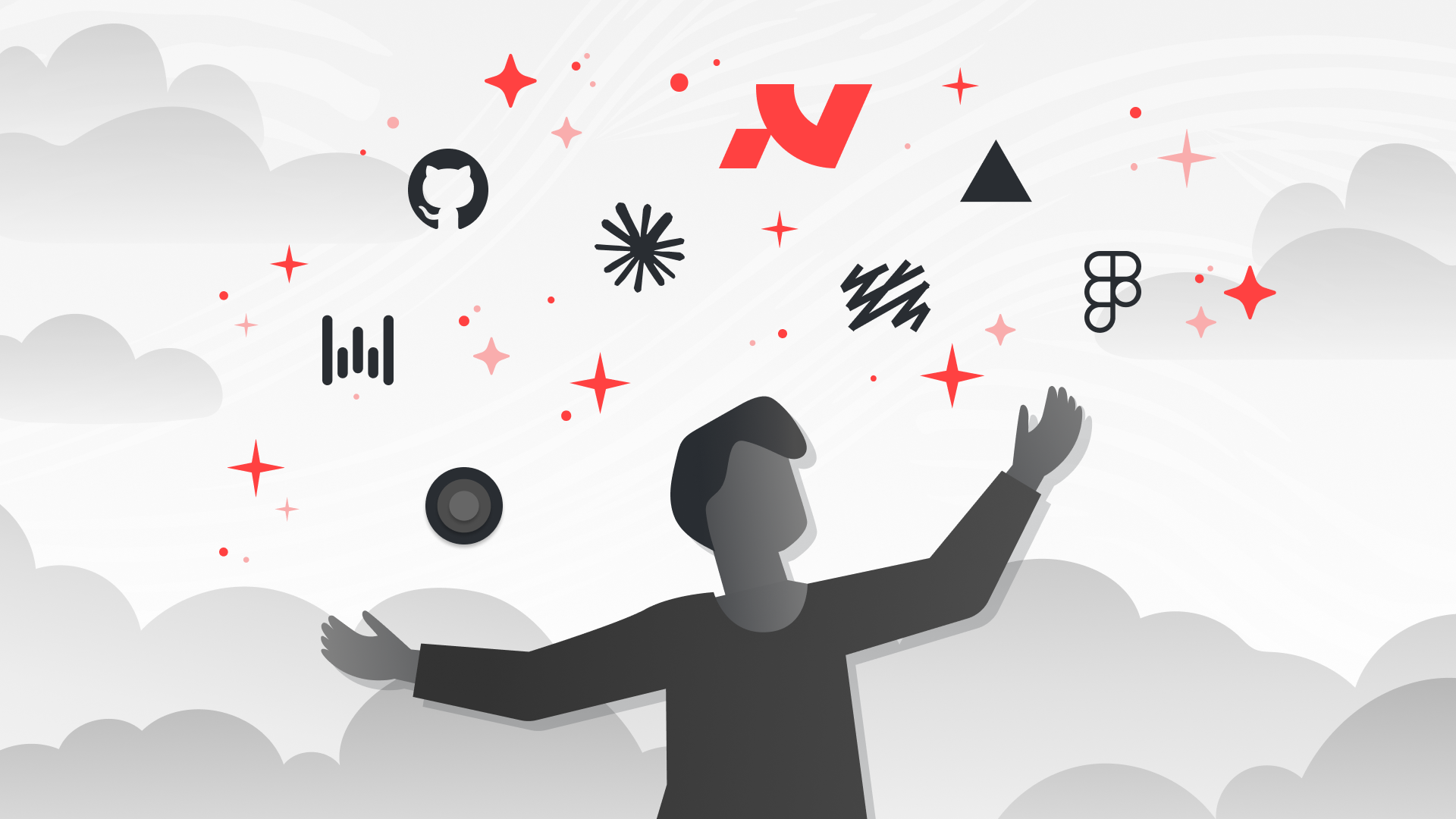
This is what I'm building with now, in case it's useful:
Ship Studio as the UI that pulls the whole stack into one place. Workspace management. Responsive testing across breakpoints. Branch management for GitHub and Vercel. It keeps you out of five different windows so you can actually build.
Claude Code for the actual development (or Codex if you'd rather use OpenAI — both work, swap them out inside Ship Studio).
GitHub for the repository and branch management.
Vercel for hosting and the domain.
Sanity for the CMS, when a CMS is needed.
MCPs connecting it all together. The Figma MCP is the one I want to point at most directly. It lets Claude actually see and reference Figma components by name and replicate the style with very little prompting overhead.
The end-to-end loop is this. I have a design in mind, or already in Figma. I screenshot it, link the file directly, or reference a generated layout from GPT image (which is currently exceptional at UI). Claude builds it in Next.js with GSAP for the motion work. I QA it. I tell it what to fix, by voice through Wispr, because I have not typed a prompt in months and I won't be going back. When the page is right, it ships through Vercel. When the client needs a CMS, I build them one in Sanity, custom to their actual workflow.
The first homepage takes longer than you think. Every subsequent page is faster than you can believe. By page four, Claude is replicating your style so cleanly that the request becomes one sentence and the result is exactly what you wanted.
I built the LekkeWeb homepage from scratch on this exact workflow. The site is live at lekkeweb.co.za. In Webflow, finessing the animations and squeezing out the performance would have taken me two solid days, easy. With Claude Code, the whole thing took a couple of hours. The Lighthouse score I got out of it was a number I have not seen in years of building in browser-based platforms.
The Webflow question
Here is the part I have not been able to argue my way out of, no matter how hard I have tried.
The main reason most agencies stay on Webflow or Framer is the CMS. The client can log in, the client can edit, the client can publish. That is a real feature. It has carried entire business models for the last decade.
The moment you can build a custom CMS in Sanity, the Webflow CMS argument quietly collapses. Sanity is free. The schema is whatever you want it to be. There is no plan tier that suddenly costs you double because your client added eleven collection items instead of ten. There is no functionality wall you have to apologise to your client about. The client owns the repository. The client owns the hosting. The client owns the CMS. The client owns the cost structure.
Webflow is not going to catch up to that, because catching up would mean dismantling Webflow. It is a platform built on serving everyone, which is also the reason it cannot serve any one client the way I can now serve mine.
There is still a market for Webflow. There is still a market for WordPress, and that should tell you everything about how long established platforms persist. I am not arguing those tools are going away. I'm saying that for the work I want to do, with the level of control I want to give my clients, I'm moving on.
The slop argument
Here is where I get tired.
The loudest voices about AI being "slop" are almost always the people who have used ChatGPT once, as a chatbot, badly. They have not touched Claude Code. They have not connected an MCP. They have not built a fucking thing. They have read someone else's anti-AI post, agreed with it, and started forwarding the take to anyone who will listen.
Meanwhile a quieter group of designers and developers are out-building them, charging more, delivering faster, and having more fun. The gap is widening by the week.
The deepest version of the anti-AI argument is "AI cannot be creative, creativity is what makes us human." This is the line I have spent the most time chewing on, and I think it might just turn out to be the biggest lie we told ourselves.Maybe not today, maybe not tomorrow, but it’s coming.
There is a scene from I, Robot I keep coming back to. Will Smith's character asks the robot if it can write a symphony, paint a masterpiece, turn a canvas into something beautiful. The robot looks at him and asks, "Can you?"
That used to feel like a clever piece of sci-fi writing. It is now something I think about every week, because the answer most of us would have to give honestly is no. The skill ladder of creativity has more rungs than most people are willing to admit they are not climbing.
When AI images first arrived, you could spot them instantly because they were too clean. The perfection gave them away. AI got better at mimicking imperfection. Now you usually can't tell. The same arc is playing out in writing, in code, in design thinking. The thing we said was sacred keeps getting mimicked, one layer of "imperfection" at a time.
The deeper truth most people won't say out loud is that the fear of AI is the fear of irrelevance. If a tool can do what only I could do, where does that leave me? It is a real question, and it deserves a real answer. Calling the tool bad doesn't change the question, it just lets you avoid sitting with it. The version of you who only knew how to do that one thing was always going to be replaceable. The version of you who learns how to use the tool is not.
The era
AI is not a bubble. The dot-com burst happened, and the internet did not go away. Google was still there. The shift was permanent.
AI is not a phase. It is an era. It belongs in the same sentence as the printing press, the automobile, and the internet. You do not get to opt out of an era. You get to decide what role you play inside it.
I am working more than I ever have. I am also enjoying the work more than I ever have. Every week, I sit down at my desk and am still genuinely surprised by what is now possible that wasn't last month. That feeling is not coming back to people who are still arguing whether AI is a fad in 2026.
The boring internet is dying. Slowly, then quickly. The interesting one is being built right now, often by people you have never heard of, in workflows you have not yet imagined.
If you are still on the fence about whether to learn this stuff, the answer is yes, and the longer you wait the steeper the catch-up curve gets.
Onwards and upwards.